
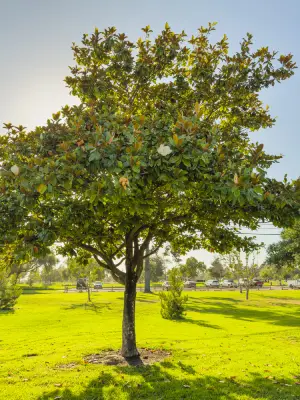
 How to Care for a Southern Magnolia Tree in Florida
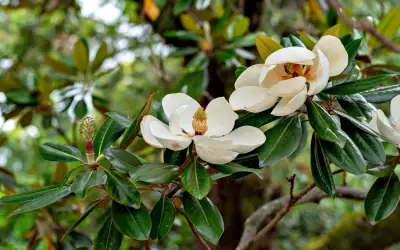
With their oversized, glossy green leaves and massive, creamy white blossoms that perfume the warm summer air, the Southern magnolia (Magnolia grandiflora) evokes a sense of classic elegance that few other trees can match.
However, while these native beauties are naturally resilient, the combination of Florida’s sandy soils, intense heat, and seasonal hurricanes means they require specific care to truly thrive. At Grasshoppers, we have extensive experience caring for magnolia trees through all seasons and growth stages. We’ve put together this comprehensive guide that covers everything Florida homeowners and commercial property managers need to know.
Choosing the Right Magnolia Variety for Your Space
Before planting, it is vital to match the right cultivar to your property’s spatial constraints.
Standard Southern Magnolia (Magnolia grandiflora)
The wild native. These giants can easily reach heights of 60 to 80 feet with a canopy spread of 40 feet. They require massive spaces, making them ideal for large estates, parks, or open commercial acreage.
‘Little Gem’ Magnolia
The ultimate choice for modern Florida residential lots. ‘Little Gem’ is a dwarf cultivar that typically caps out at 20 to 25 feet tall with a tight, 10-to-15-foot spread. It blooms at a remarkably young age and features an intense, rusty-brown underside on its leaves.
‘D.D. Blanchard’ Magnolia
Famous for its strictly pyramidal growth habit and striking open structure. It grows to about 50 feet tall and is highly favored by landscape architects for framing commercial walkways and avenues because it maintains a neat, symmetrical shape with minimal effort.
Magnolia Tree Planting: The Step-by-Step Method
 In Florida, tree planting requires more than just putting a tree in some soil. Timing and depth dictate whether a newly transplanted magnolia lives or dies.
When to Plant in Florida
The optimal window for planting magnolias in Florida is from November through March. Planting during these cooler, dormant months allows the root system to adapt to the native soil before being subjected to the brutal stress of a Florida summer. Avoid planting between June and September unless you are prepared to commit to a rigorous, daily irrigation schedule.
Step-by-Step Planting Guide
1. Select a full sun location
Ensure the site receives at least 6 hours of direct sunlight daily. Situate standard varieties at least 20-30 feet away from foundations, sidewalks, and underground utilities to accommodate future root expansion.
2. Dig a wide, shallow hole
Dig the hole two to three times wider than the root ball, but exactly the same depth as the root ball. Magnolias possess a shallow, wide-spreading root architecture; they must breathe and will suffocate if planted too deeply.
3. Expose and position the root flare
This is crucial for survival. Remove all burlap, wire cages, and plastic containers. Locate the root flare (where the trunk widens at the soil line). Position the tree so the flare rests 1 to 2 inches above the surrounding grade to allow for natural settling.
4. Backfill with native soil
Fill the hole using only the native sandy soil you dug out. Do not mix in rich potting soils or peat moss — forcing the roots to transition from highly enriched soil to poor native sand creates a “container effect” where roots refuse to spread outward. With native soil, there are no amendments needed.
5. Mulch properly to a 3” depth.
Apply a 3-inch layer of organic hardwood mulch across the entire planting zone to retain moisture and cool the roots. Keep the mulch 3 to 4 inches away from the trunk bark to prevent fungal rot.
We’ll Hop On It!! Just leave your information below.Speak with a Grasshopper’s Landscaping Expert!
Irrigation: How to Properly Water Your Magnolia
Magnolias have zero tolerance for standing water, yet they require heavy moisture to establish their root zones.
Tree Status | Timeline / Condition | Watering Frequency & Volume |
Newly Planted (Establishment Phase) | Months 1–3 | 3 times per week (Apply ~3 gallons per inch of trunk diameter) |
Newly Planted (Establishment Phase) | Months 4–6 | 2 times per week (Apply ~3 gallons per inch of trunk diameter) |
Newly Planted (Establishment Phase) | Months 6 to 2 Years | Once a week until fully established (Apply ~3 gallons per inch of trunk diameter) |
Established Tree (2+ Years) | Normal weather | No supplemental watering needed (Natural rainfall is sufficient) |
Established Tree (2+ Years) | Extreme dry spells / Spring droughts (April–May) | Supplemental deep watering during prolonged dry periods |
Warning: Avoid pointing automatic lawn sprinklers directly at a magnolia trunk. Constant hitting by daily irrigation spray will saturate the bark, leading to trunk cankers and fungal decline.
Magnolia Maintenance – Tips for Trimming & Pruning
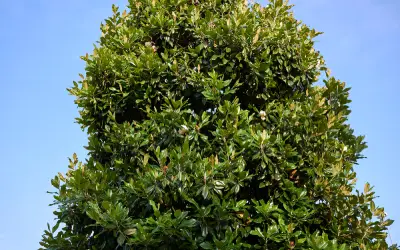 Magnolias generally look best when allowed to grow naturally into their classic pyramidal shape, with branches extending all the way down to the ground. However, trimming and pruning are occasionally required.
The Ideal Pruning Window
The best time to prune a Southern Magnolia is in late winter or early spring (January to March), right before the tree initiates its spring growth spurt. This gives the cuts time to seal cleanly. You can also do light cleanup work in mid-summer after the primary blooming cycle ends.
Harmful Practices to Avoid
- Lifting the Lower Canopy: Many homeowners try to cut off the lower branches of a magnolia to grow grass underneath. This is a massive mistake. A magnolia’s low canopy naturally protects its highly sensitive, shallow root system from sunscald and heat stress. Lifting the canopy leaves the roots completely vulnerable.
- Topping or Hat-Racking: Cutting the central leader trunk off a young magnolia ruins its natural symmetry permanently. The tree will respond by pushing out weak, vertical watersprouts that easily snap off during minor tropical storms.
- Over-Thinning: Removing more than 20% of a magnolia’s canopy at one time strips away its primary food source (photosynthesis) and will cause the remaining interior branches to suffer severe bark sunscald.
How Does Florida Soil Affect Magnolias?
Unlike live oaks, Southern Magnolias are relatively heavy feeders and are incredibly sensitive to the chemical makeup of Florida soil.
Southern Magnolias strictly prefer acidic to neutral soil (pH 5.0 to 6.5). Unfortunately, Florida coastal soils and areas near concrete sidewalks or limestone foundations are highly alkaline (high pH). When planted in high pH environments, magnolias suffer from iron chlorosis—a condition where the tree cannot absorb iron, causing the leaves to turn a sickly pale yellow while the veins stay dark green.
Best Fertilization Practices
If your soil test reveals a nutrient deficiency or your tree shows stunted growth, apply a high-quality, slow-release fertilizer explicitly formulated for acid-loving trees in early spring.
- Look for an Ideal NPK Ratio: Use a blend with a 3-1-2 or 4-1-2 ratio (such as 12-4-8 or 16-4-8). If your tree is planted near concrete foundations or coastal areas where the pH is highly alkaline, opt for an 8-2-12 palm or landscape blend, which provides the extra potassium magnolias need to combat high pH stress.
- Insist on Micronutrients: Ensure the blend contains essential, slow-release micronutrients—specifically iron, magnesium, and manganese. These are critical for preventing iron chlorosis and keeping the leaves a deep, glossy green.
- Apply Correctly: Always broadcast the fertilizer evenly across the entire root zone, stretching well out past the drip line. Never dump fertilizer against the trunk.
Common Magnolia Pests and Diseases in Florida
Keeping a watchful eye out for these localized threats can mean the difference between a happy, healthy tree and a declining tree.
Pests
- Magnolia Scale: These look like small, bumpy white lumps attached to twigs and branches. They suck out essential sap, severely weakening branches and excreting a sticky fluid called honeydew.
- Sooty Mold: This is a black, velvety fungus that grows directly on top of the sticky honeydew left behind by scale insects. While it doesn’t attack the tree tissue directly, it looks terrible and can block sunlight from reaching the leaves, impairing photosynthesis.
- Spider Mites: These tiny pests thrive during dry Florida springs. They feed on the underside of leaves, causing the top of the foliage to take on a washed-out, dusty bronze appearance.
Diseases
- Algal Leaf Spot (Cephaleuros virescens): Incredibly common during hot, humid Florida summers. It creates raised, velvety, reddish-brown or gray spots on the leaves. Fortunately, it is mostly cosmetic and rarely harms a healthy tree.
- Fungal Leaf Drop: Caused by poor air circulation. If a magnolia is overcrowded by neighboring trees, fungal pathogens will thrive in the humid canopy, causing older leaves to develop large brown spots and drop prematurely.
Why Southern Magnolias Are Perfect for Florida Properties
There is a reason why commercial developers and homeowners alike use magnolias as focal points in their landscape designs. Yes, they look great in Florida landscapes, but they also have some practical benefits:
- Wind Resistance: While not quite as indestructible as a live oak, the Southern magnolia possesses an incredibly stout, sturdy trunk and a flexible wood structure. When properly pruned, their dense, pyramidal canopy deflects high winds remarkably well during hurricane season.
- Salt Tolerance: For coastal property owners, magnolias offer moderate aerosol salt tolerance. They can handle the salt spray of coastal zones far better than delicate structural maples or oaks.
- Commercial Appeal: For Florida businesses, a mature magnolia conjures instant luxury branding. The dense evergreen foliage acts as an excellent, year-round privacy screen or windbreak, while the massive summer blooms create a highly welcoming entryway.
Are There Any Drawbacks of Magnolias on Your Property?
While the Southern Magnolia is an undisputed icon of Southern landscapes, it does present a few unique maintenance and structural challenges that every Florida property owner should consider before buying.
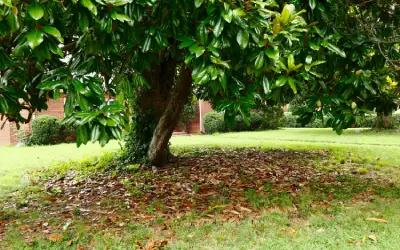
- Constant Leaf and Seedpod Debris: Although classified as evergreens, magnolias drop massive, leathery leaves throughout the spring, followed by heavy, woody cone-like seedpods in late summer. Because these thick leaves take months to decompose, they will quickly smother and kill turfgrass directly beneath the canopy.
- Aggressive, Exposed Surface Roots: Magnolias possess an incredibly shallow, wide-spreading root architecture. As the tree matures, massive woody roots will break the surface of the soil. This makes mowing near the tree difficult and can create tripping hazards if planted too close to walkways.
- Nutritional Demands in Florida Soil: Unlike lower-maintenance native trees like Live Oaks, magnolias are heavy feeders that strictly require acidic soil. In Florida’s highly alkaline coastal sands or near concrete features, they require frequent, targeted fertilizer applications to prevent severe iron deficiencies.
Pro Tip: To minimize these drawbacks, avoid planting magnolias directly in open turf. Instead, site them inside a wide, dedicated landscape bed. This allows the heavy leaf drop to serve as natural, self-sustaining mulch, while completely removing the need to mow over exposed surface roots.
Florida Magnolia Tree FAQs
Got questions about how to grow Southern Magnolia trees in Central Florida? The Grasshoppers team is here to answer them. If you don’t find the information you need here, feel free to reach out to us anytime.