How to Care for a Live Oak Tree
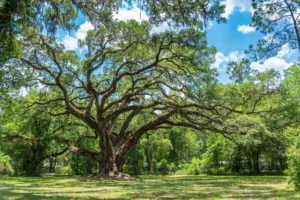
With its sprawling branches draped in Spanish moss and its deep roots anchoring it firmly in our sandy soil, the live oak tree is truly inseparable from Florida’s identity. But even the toughest trees need proper care to thrive.
If you’ve been wondering how to care for a live oak tree the right way, you’re in the right place. As tree care professionals who have worked with live oak trees in Florida for years, we’re sharing everything you need to know about keeping these Southern icons healthy and beautiful.
Why They Are Perfect for Florida Homes and Businesses
There’s a reason you see live oaks everywhere, from historic downtown districts to modern commercial developments:
- Live oaks have incredible staying power. They are among the most hurricane-resistant trees you can plant in our state. The root system architecture of a healthy live oak spreads wide and deep, creating an anchor that can withstand powerful winds. Their wood properties also give them flexibility, which means they bend without breaking when other trees snap in half.
- Their growth habit also works in their favor during storms. Live oaks’ broad, spreading canopy and smaller leaves allow wind to pass through more easily than trees with denser foliage. This natural hurricane-resistant design is one of the main reasons live oaks have survived in Florida for hundreds of years.
- For businesses, live oaks add instant curb appeal and a sense of established permanence. Nothing makes a commercial property look more welcoming than healthy, mature trees framing the entrance.
Live Oak Varieties
Southern Live Oak (Quercus virginiana)
When people talk about oak trees in Florida, they’re usually referring to the Southern live oak.
Once established, these trees are quite drought-tolerant, making them excellent choices for property owners who want beautiful trees without excessive watering requirements.
Their ability to survive extended dry periods while still maintaining their evergreen foliage is one of their greatest strengths.
Sand Live Oak (Quercus geminata)
Another variety worth mentioning is the sand live oak, which is actually native to Florida’s coastal areas and scrubland.
Sand live oaks are smaller than their Southern cousins and are extremely drought-resistant.
They’re an excellent choice if you have a smaller property or want a live oak that won’t grow quite as large.
Live Oak Tree Planting
When to Plant Them
The best time for live oak tree planting in Florida is during our cooler months, from late fall through early spring. Planting between November and March gives your new tree time to establish its root system before the stress of summer heat arrives.
So avoid planting during the peak of summer months if possible. The combination of extreme heat and the stress of transplanting can be too much for a young tree to handle. If you must plant during warmer months, be prepared to provide extra water and attention.
How to Choose the Right Location
Before you dig, think carefully about where your live oak will live for the next century or more. Yes, a healthy live oak can actually live for 200 to 300 years (or longer). That means the location you choose today will affect your property (and possibly your great-great-grandchildren’s property) for generations.
Live oaks need plenty of room to grow. A mature Southern live oak can have a canopy spread of 80 feet or more, with a trunk diameter of several feet. Plant too close to structures, and you’ll be dealing with costly problems as the tree matures. Consider future growth when selecting your planting site, and give your tree plenty of space from buildings, power lines, septic systems, and paved surfaces.
Live oaks also prefer full sun to partial shade and adapt well to various soil types, including the sandy soils common throughout Florida. They tolerate both wet and dry conditions once established, though they don’t like standing water around their roots for extended periods.
Other Tips & Techniques
- When planting your live oak, dig a hole that’s two to three times wider than the root ball but no deeper than the root ball itself. This wide, shallow hole encourages roots to spread outward rather than circling in a confined space.
- Remove any burlap, wire baskets, or containers from the root ball.
- Place the tree so that the root flare (where the trunk begins to widen at the base) sits at or slightly above ground level.
- Backfill with the native soil you removed.
- Water deeply to settle the soil and eliminate air pockets.
- Apply a three to four-inch layer of mulch around the tree, keeping it several inches away from the trunk to prevent moisture buildup against the bark.
Watering Your Live Oak
For Newly Planted Trees:
For the first two years after planting, your live oak needs consistent moisture to establish its root system. Water deeply two to three times per week during dry periods. The goal is to keep the root ball and surrounding soil consistently moist but not waterlogged (soaked to the point where water can’t be absorbed anymore).
Provide about two to three gallons of water per inch of trunk diameter at each watering. This means a tree with a two-inch trunk would need about four to six gallons each time you water.
For Established Trees:
Once your live oak has been in the ground for two years or more, it becomes much more drought-tolerant. When established, they often need no supplemental watering at all, except during extended dry spells.
Apply water slowly over the entire root zone to encourage deep root growth. Overwatering is actually more of a concern than underwatering for established live oaks. Constantly wet soil can lead to root rot and other problems. When in doubt, less water is usually better than more.
We’ll Hop On It!! Just leave your information below. We’ll Hop On It!! Just leave your information below. *During normal business hours. Mon – Fri: 8:00am – 5:00pm. After hours calls will be returned the next business day.Speak with a Grasshopper’s Landscaping Expert!
Live Oak Tree Trimming & Pruning
What’s the Difference Between Trimming & Pruning?
Many people use these terms interchangeably, but they actually refer to different practices.
Trimming typically refers to lighter maintenance work: removing small dead branches, clearing away growth that’s blocking walkways or structures, and general shaping for appearance. Pruning is more involved structural work aimed at the long-term health and safety of the tree. This includes removing larger limbs, correcting growth patterns, and addressing structural weaknesses that could cause problems during storms.
Both are important parts of live oak tree care, but pruning especially should be done by trained professionals who understand tree biology and proper cutting techniques.
When to Trim and Prune
The primary window for pruning is January through March, before the spring growth flush. This timing allows cuts to begin healing quickly once the tree enters its active growing season. A secondary window runs from October through December, after hurricane season has passed. This can be a good time to address any storm damage and prepare your tree for the coming year.
The months you absolutely want to avoid for major pruning are June through September: our active hurricane season. Freshly pruned trees are more vulnerable to storm damage, and the summer months bring additional stress from heat and the threat of severe weather.
However, some light trimming to remove small dead branches or clear obstructions can be done at any time without significant risk to the tree.
Practices to Avoid
Unfortunately, we often see live oaks that have been damaged by improper pruning. These harmful practices might seem like good ideas at the time, but they can ruin a tree’s structure and actually make it more dangerous during storms:
- Lion’s tailing is a practice where someone removes all the interior branches and foliage, leaving growth only at the ends of branches. This creates a “lion’s tail” appearance and dramatically increases the risk of branch failure. Without interior branches to distribute weight and slow wind flow, the remaining branches experience much greater stress during storms.
- Topping or hat-racking involves cutting back all the branches to stubs, essentially removing the entire canopy. This is never appropriate for live oaks. The resulting growth is weakly attached, prone to decay, and far more dangerous than the original branches would have been. Trees that have been topped are permanently compromised and may never fully recover.
- Excessive canopy lifting means removing too many lower branches. While some lifting may be needed for clearance, removing too many low branches shifts weight to the upper canopy and can destabilize the entire tree.
- Over-thinning removes too much of the tree’s foliage, which reduces the tree’s ability to produce energy through photosynthesis and can lead to sunscald on previously shaded bark. A properly pruned live oak should retain at least 75% of its living canopy.
If anyone suggests any of these practices for your live oak, find a different tree service immediately.
Fertilization Tips for Live Oaks
Live oaks growing in good soil often need little to no supplemental fertilization. In fact, over-fertilizing can cause more problems than under-fertilizing, encouraging excessive soft growth that’s more attractive to pests and more vulnerable to damage. Also:
- Trees growing in poor soil or showing signs of nutrient deficiency can benefit from careful fertilization. Yellow leaves, stunted growth, or sparse foliage may indicate that your tree needs nutritional support.
- If fertilization is needed, use a slow-release fertilizer formulated for trees in late winter or early spring, just before the growing season begins.
- Avoid fertilizers with high nitrogen content, which can promote weak, rapid growth at the expense of strong wood development.
The best way to determine if your live oak needs fertilization is through soil testing and professional assessment. What works for one tree may not be right for another, depending on soil conditions, tree age, and overall health.
Common Pests and Diseases That Affect Live Oak Trees in Florida
Pests
- Oak leaf rollers are caterpillars that roll themselves up in leaves and feed on foliage. While they can cause cosmetic damage, healthy trees typically recover without intervention. Heavy infestations may benefit from treatment.
- Gall-forming insects create abnormal growths on leaves and twigs. These galls are usually more unsightly than harmful, and treatment is rarely necessary unless galls appear in huge numbers year after year.
- Scale insects attach themselves to bark and branches, feeding on tree sap. Severe infestations can weaken trees over time. Scale is often more problematic on stressed trees, so maintaining overall tree health is the best prevention.
- Wood-boring beetles attack trees that are already stressed or damaged. The best defense against borers is keeping your tree healthy through proper watering, mulching, and pruning practices.
Diseases
- Oak wilt is a serious fungal disease that can kill live oaks. Fortunately, it’s relatively rare in Florida compared to other states, but it does occur. Symptoms include rapid browning and dropping of leaves, often starting on one side of the tree.
- Bacterial leaf scorch causes browning along leaf margins that gradually spreads inward. There is no cure, but proper tree care can help affected trees manage the disease for many years.
- Root rot diseases thrive in wet conditions and can cause decline and death in live oaks with poor drainage or that are overwatered. Symptoms include yellowing leaves, sparse canopy, and decline over time.
- Mistletoe is actually a parasitic plant rather than a disease, but it’s common on live oaks in Florida. While small amounts of mistletoe rarely harm healthy trees, heavy infestations can stress trees over time.
How to Keep Your Live Oaks Healthy Year-Round
The best approach to live oak tree care is preventive maintenance rather than reactive problem-solving. A healthy tree resists pests and diseases better, recovers from stress faster, and withstands storms more effectively than a neglected tree.
- Start with proper mulching. Maintain a three to four-inch layer of organic mulch over the root zone, extending out as far as practical from the trunk. Keep mulch several inches away from the trunk itself to prevent moisture-related bark problems. Mulch moderates soil temperature, retains moisture during dry periods, and adds nutrients as it breaks down.
- Protect the root zone from compaction. Tree roots need oxygen, and compacted soil prevents air from reaching them. Avoid parking vehicles or placing heavy equipment under the canopy. If you’re planning construction or landscaping near an established live oak, consult with a tree professional about protecting the root zone.
- Address problems early. If you notice changes in your tree’s appearance (unusual leaf color, sparse growth, bark abnormalities, or visible pests), don’t wait to get it checked out. Early intervention is almost always easier and more successful than treating advanced problems.
- Schedule regular professional inspections. Even if your tree looks healthy, an annual check-up by a professional can identify potential problems before they become serious. Professional eyes often catch issues that property owners miss.
How to Prepare Them for Hurricane Season
The most important storm preparation happens months before hurricane season begins. But there are equally important things to consider afterwards:
- Have your trees professionally inspected and pruned during the winter months, well before June arrives. This gives cut surfaces time to heal before storm season and allows you to address any structural weaknesses when conditions are calm.
- During pre-season pruning, focus on removing dead wood, eliminating structural defects, and reducing end-weight on long branches. A tree that’s been properly maintained over the years will have a strong central structure and balanced canopy that handles high winds much better than a neglected tree.
- When a hurricane is approaching, resist the urge to do last-minute pruning. Heavy pruning creates fresh wounds that make trees more vulnerable to wind damage and post-storm disease. Last-minute cutting can do more harm than good.
- Avoid “hurricane trimming” services that offer to dramatically thin your canopy or remove large limbs to “let the wind through.” As mentioned earlier, over-thinning actually makes trees more dangerous during storms, not less.
- Following any storm, carefully assess your trees for damage. Look for hanging branches, splits in the trunk or major limbs, leaning trees, and root damage where soil has been disturbed.
- Don’t attempt to handle significant storm damage yourself. Hanging limbs and damaged trees can be extremely dangerous. This is definitely work for professionals with proper equipment and training.
Why Professional Tree Care is Your Best Option
Applying mulch, watering appropriately, and watching for signs of problems are all things property owners can and should do. But when it comes to pruning, disease treatment, and storm preparation, professional tree care delivers results that DIY efforts simply can’t match. Here’s why:
- Knowledge and Training: Tree experts understand tree biology at a deep level. We know how trees respond to different types of cuts, which branches are safe to remove and which should stay, how diseases spread, and how to promote strong structure over time. This knowledge comes from years of education and hands-on experience.
- Proper Equipment: Professional tree work requires specialized equipment that most homeowners don’t have access to. From climbing gear to professional-grade pruning tools to equipment for safely handling large limbs, the right tools make a huge difference in both the quality of work and safety during the process. Attempting tree work with inadequate equipment puts you at risk and often results in poor cuts that damage the tree.
- Safety: Tree work is consistently ranked among the most dangerous occupations. Falls from heights, struck-by hazards, and chainsaw injuries are all too common among untrained workers and homeowners attempting DIY tree care. Professionals have the training, equipment, and experience to work safely at heights and handle heavy wood without incident. The risk simply isn’t worth it when professional help is available.
- Long-Term Results: Perhaps most importantly, professional care delivers better long-term results for your trees. A well-maintained live oak can thrive for centuries, providing shade, beauty, and property value for generations. Poor care, on the other hand, can compromise a tree’s health and structure in ways that may not be immediately obvious but cause problems years down the road. When you invest in professional live oak tree maintenance, you’re investing in the long-term health of trees that may well outlive you.
Get the Best Live Oak Care from Grasshoppers
These remarkable trees have survived countless hurricanes, droughts, and everything else Florida throws at them. So with proper care, they’ll continue thriving for generations to come. Whether you need live oak tree planting guidance, seasonal pruning, disease treatment, or storm preparation, working with knowledgeable professionals ensures your trees get the care they deserve.
Don’t trust your live oaks to just anyone, partner with experts who understand these magnificent trees and know how to care for live oak trees the right way. If you have live oaks on your property and want to make sure they’re getting proper care, Grasshoppers is here to help.
Contact our team today to schedule an inspection and learn exactly what your trees need to stay healthy, beautiful, and storm-ready for years to come.