 Palm trees and Florida – as the kids like to say, “name a more iconic duo.” These trees are a time-honored symbol of Florida’s unique tropical beauty, defining the landscape from the coast to the heart of Florida. Palm trees thrive here because our climate mimics their natural tropical habitats, yet they still require a level of specific care to remain healthy in a residential or commercial setting.
In this guide to palm tree care in Florida, we’ll run down everything you need to know to keep yours looking healthy and beautiful.
When to Plant Palm Trees in Florida
Timing is everything when introducing a new palm to your property. While Florida stays relatively warm year-round, palms prefer to establish their root systems when the environment is most supportive.
- Warm Soil is Key: Palms grow roots most aggressively when soil temperatures are consistently high.
- Avoid Cooler Months: Don’t plant palm trees in late autumn or winter if you can help it. If a cold snap hits before the roots have taken hold, the tree is much more likely to suffer permanent damage.
- The Ideal Time: Aim for the “sweet spot” of late spring or early summer (typically April through August). This allows the tree to take advantage of the rainy season and high humidity.
How to Plant Palm Trees
Palm tree installation is arguably the most important aspect of palm tree care because the steps taken on day one will affect the tree’s health for the rest of its life. A palm that starts in the wrong conditions will struggle to ever reach its full potential.
- Sun and Shadow: Research your specific species. While most palms love full sun, some “understory” palms prefer filtered light or partial shade.
- Drainage and Slope: Palms generally dislike “wet feet.” Ensure your planting site doesn’t collect standing water. Planting on a slight mound can help with drainage in lower-lying areas of Florida.
- How to Dig the Right Hole: Dig a hole twice as wide as the root ball but no deeper. Planting a palm too deeply can starve the roots of oxygen and lead to trunk rot.
- Hydration Potential: Build a small soil berm around the base to act as a reservoir, ensuring water reaches the root ball directly during those first critical weeks.
How to Maintain and Care for a Palm Tree
While the Florida climate does a significant amount of the heavy lifting, your palms still require consistent trimming and care to live their best lives. Here’s what you can do:
- Nutritional Support: Use a slow-release fertilizer formulated specifically for palms (look for an 8-2-12 ratio). Florida soils are often deficient in magnesium and potassium.
- Strategic Pruning: Only remove fronds that are completely brown and dead. Removing green (or even yellowing) fronds can deprive the tree of nutrients and stress the “heart” of the palm.
- Deep Watering: During dry spells, a deep soak once or twice a week is better than a light daily sprinkle. Aim for the root zone, not the trunk.
Speak with a Grasshopper's Landscaping Expert!
We'll Hop On It!! Just leave your information below.
How to Tell If Your Palm Is Sick or Stressed
If your palm tree is struggling, early intervention is crucial to saving it. Like any living thing, palms show physical symptoms when they are under internal or external stress.
Yellowing or Spotted Fronds (Nutrient Deficiency):
- How to Identify: Older fronds develop orange or yellow spotting, or the entire leaf turns a pale lime-green.
- Possible Solution: This is usually a potassium or magnesium deficiency. Apply a high-quality, slow-release 8-2-12 palm special fertilizer. Do not use “turf” fertilizer near the palm, as the high nitrogen in lawn food can actually trigger a potassium crash in the tree.
“Frizzle Top” or Scorched New Growth (Manganese Deficiency):
- How to Identify: The newest leaves emerging from the top look stunted, shriveled, or “burnt” before they even unfurl.
- Possible Solution: This is common in the alkaline soils of Florida. Apply a manganese sulfate supplement (not magnesium, which is different) to the soil or as a trunk injection to jumpstart healthy new growth.
The “Spear Leaf” Pulling Out (Bud Rot):
- How to Identify: The central, unopened leaf at the very top of the tree (the spear) wilts or turns brown. If you tug on it and it slides out of the trunk easily, the “heart” of the palm is rotting.
- Possible Solution: This is often fungal. If caught very early, a copper-based fungicide drench poured directly into the crown can stop the rot. If the spear leaf pulls out and smells like rotting organic matter, the tree is likely beyond saving and should be removed to protect nearby palms.
Holes in the Trunk or “Sawdust” (Pest Infestation):
- How to Identify: Small, perfectly round holes in the trunk or a pile of “frass” (sawdust-like excrement) at the base of the tree.
- Possible Solution: This indicates Palmetto Weevils or Giant Palm Borers. You must apply a systemic insecticide (containing Imidacloprid or Dinotefuran) as a soil drench. The tree absorbs the medicine through the roots to kill the larvae inside the trunk.
Mushy Trunk or Mushroom Growth (Ganoderma Butt Rot):
- How to Identify: A hard, shelf-like mushroom (conk) grows at the base of the trunk, or the lower trunk feels soft and hollow when tapped.
- Possible Solution: There is no cure for Ganoderma. Palm tree removal is necessary, and the soil should be treated. Do not plant another palm in that same spot, as the fungus stays in the soil for years.
Protecting Your Palm Trees from Extreme Heat
We occasionally have those blistering summer days where even the hardiest palm trees struggle. High heat combined with high evaporation can lead to leaf scorch.
- Wilting and Folding: If the leaflets are folding inward, the tree is trying to conserve moisture.
- Hydration Boost: Increase watering frequency during heatwaves, ideally in the early morning or late evening to prevent evaporation.
- Mulching: Apply a 3-inch layer of organic mulch around the base (but not touching the trunk) to keep the root system cool and retain moisture.
Dealing with Frost and Cold
While cold snaps and frost in Florida are rare, they can happen — and they can be devastating to tropical palms. Preparation can be the difference between a recovery and a loss.
- Water Before the Freeze: Moist soil stays warmer than dry soil.
- The “Wrap” Method: For smaller palms, use burlap or specialized frost blankets to cover the “bud” (the top center where growth occurs).
- Wait to Prune: If a palm suffers cold damage, do not prune the brown fronds until the threat of frost has completely passed. Those dead fronds actually provide a layer of insulation for the rest of the tree.
What Are the Most Common Palm Trees for Florida Landscaping?
Palm trees blend so seamlessly into our scenery that you may not realize just how many different species you see on a regular basis. Each has its own personality and specific needs.
Sabal Palm
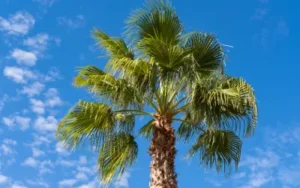
As the official state tree of Florida, the Sabal palm (cabbage palm) is incredibly hardy and salt-tolerant. They are slow growers but very low-maintenance once established. To learn more about Sabal Palms, including how to plant and care for them, read our article here.
- Newly transplanted “hurricane-cut” Sabals (where all fronds are removed) require daily watering for the first six months to ensure the root system regenerates.
- Resist the urge to prune these heavily. Only remove fronds that hang below a horizontal (9:00 to 3:00) position to avoid “pencil-topping,” which weakens the trunk.
Queen Palm
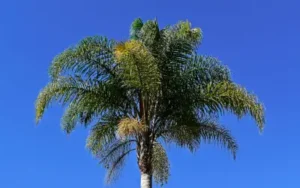
Known for its elegant, feathery fronds and rapid growth, the Queen palm is a popular choice for adding height quickly. To know if a Queen palm is right for you, check out our guide to Queen palms here.
- These are “heavy feeders” that are prone to “frizzle top” (manganese deficiency). If the new leaves look stunted or scorched, they likely need a high-quality manganese sulfate supplement.
- They struggle in alkaline soils (high pH). In Florida, it’s helpful to use an acidic fertilizer to help the tree better absorb nutrients.
Silver Date Palm
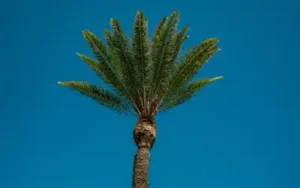 With its silvery-blue foliage and diamond-cut trunk, the Sylvester (silver date palm) is a high-end landscape favorite.
- These palms are susceptible to Graphiola leaf spot if they stay too wet. Ensure they are planted in a “high and dry” spot or on a slight mound.
- To maintain that iconic diamond-shaped trunk, you must have the old leaf bases professionally “diamond-cut” with a specialized tool. Doing this incorrectly can invite pests or rot.
Pygmy Date Palm
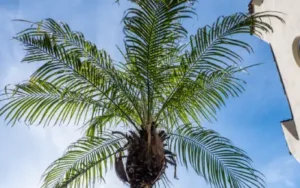 These are the perfect “accent” palms for smaller spaces or near pool decks. They often grow in clusters.
- These are the “canaries in the coal mine” for potassium deficiency. Look for orange spotting on older fronds; if you see it, increase your potassium-rich fertilizer applications immediately.
- They have 2–3 inch needles at the base of the fronds that can be toxic. Always wear thick gloves and eye protection when pruning near the heart of the palm.
Bismarck Palm
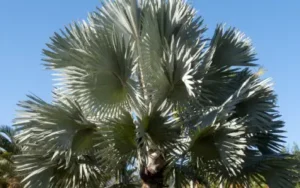 A true showstopper with massive, fan-shaped silvery leaves.
- These palms can reach a 20-foot spread. Never plant them within 15 feet of a structure, or you will eventually be forced to prune them into a “lopsided” shape that ruins their natural symmetry.
- They despise having their roots disturbed. Once a Bismarck is planted in Florida, it should never be moved, as the “transplant shock” is often fatal for this specific species.
Palm Tree Care Tips by Season
Let’s break it down now by season. Palm trees, after all, have different needs depending on what time of year it is. Here’s what you should know:
– Tips for Spring
Spring is the most active growth period for palms in Florida. This is the season to focus on fueling that growth and preparing the tree for the humidity ahead.
- Apply a high-quality 8-2-12 slow-release fertilizer to replenish nutrients depleted over the winter.
- Inspect the “spear leaf” (the new growth in the center) for any deformities or “frizzling,” which indicates a manganese deficiency.
- Increase watering frequency as temperatures rise, ensuring the soil stays moist but not swampy to support new frond development.
– Tips for Summer
The primary challenges during a Florida summer are extreme heat and the potential for fungal spread during the rainy season.
- Check for “fizzle top” or leaf spot during periods of heavy daily rain, as high humidity can trigger fungal infections.
- Water in the early morning to ensure the tree has a moisture reservoir before the peak afternoon sun leads to leaf scorch.
- Maintain a 3-inch layer of mulch around the base of the tree to regulate soil temperature and retain moisture during heatwaves.
– Tips for Fall
As the growth rate slows, maintenance shifts toward strengthening the tree for the cooler months and cleaning up debris.
- Perform a final fertilization in early fall to build up the tree’s internal strength before the winter dormancy period.
- Remove only fully brown fronds to improve airflow and reduce hiding spots for pests like palmetto weevils.
- Clear fallen fruit and debris from the base of the tree to prevent rot and keep local pests from nesting near the trunk.
– Tips for Winter
In Florida, winter care is entirely about protection and conservation. Avoid any aggressive maintenance that could stress the tree.
- Suspend all pruning, even of brown fronds, as they provide a natural insulation layer for the trunk and “heart” of the palm during cold snaps.
- Monitor local frost warnings and water the palms deeply 24 hours before a freeze to help the soil retain heat.
- Avoid fertilizing until the soil temperature consistently rises again in the spring, as the tree cannot efficiently process nutrients while dormant.
Call Us for Expert Palm Tree Care in Greater Orlando
Maintaining the health of your palms ensures your property remains a beautiful, tropical retreat. From the initial planting to diagnosing complex diseases, your trees deserve professional attention to thrive in our unique climate.
At Grasshoppers, we specialize in the specific needs of Florida’s iconic greenery. Don’t wait until your palms show signs of distress — contact Grasshoppers today to schedule a professional consultation and keep your landscape looking its best.
Back to Tree Care