
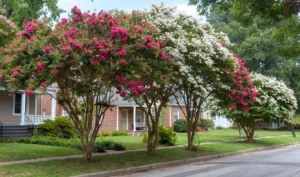
When it comes to stunning Florida landscapes, few trees deliver quite like the crape myrtle tree. With their vibrant summer blooms, attractive bark, and manageable size, crape myrtles in Florida have become a beloved choice for homeowners and commercial properties alike.
But here’s the thing: while crape myrtles are relatively easy to grow, they do need proper care to truly thrive. Without the right attention, these beautiful trees can become overgrown, stressed, or even develop health problems.
Thankfully, the ISA-certified arborists at Grasshoppers are here to help. By using their extensive knowledge, experience, and training, they can make crape myrtle care a quick and simple process. That way, your property can look amazing without you having to break a sweat!
Why Crape Myrtles Are Perfect for Florida Landscapes
Whether you want to add a pop of color to your entrance landscaping or create a stunning focal point in your yard, crape myrtle planting is a smart investment for your property. These trees thrive in our warm weather and actually need the heat to produce their signature colorful blooms.
Here’s why Florida homeowners love crape myrtles:
- Stunning summer flowers in shades of pink, red, purple, and white
- Year-round visual interest with attractive peeling bark
- Drought tolerance once established
- Manageable size for most residential properties
- Low maintenance compared to many other flowering trees
- Long blooming season that can last from late spring through fall
Crape Myrtle Planting
When to Plant Crape Myrtles in Florida
In Florida, the best time to plant these trees is during the cooler months: typically from late fall through early spring. This gives the tree time to establish its root system before the intense summer heat arrives.
How to Choose the Right Location
One of the biggest mistakes homeowners make with crape myrtles is planting them in the wrong spot. These trees need:
- Full sun: At least 6 hours of direct sunlight daily for the best blooms
- Good drainage: Crape myrtles don’t like wet feet
- Adequate space: Consider the mature size of your chosen variety
- Air circulation: Good airflow helps prevent fungal diseases
Planting Tips From Our Arborists
To give your crape myrtle the best start:
- Dig a hole two to three times wider than the root ball.
- Make sure the hole is no deeper than the root ball itself.
- Place the tree so the top of the root ball sits slightly above ground level.
- Backfill with native soil (no need for amendments in most Florida soils).
- Create a shallow basin around the tree to hold water.
- Apply 2-3 inches of mulch, keeping it away from the trunk.
- Water deeply immediately after planting.
How to Water Your Crape Myrtle
Newly Planted vs Established Trees
During the first growing season, your crape myrtle needs regular watering to establish strong roots. Water deeply two to three times per week, making sure the soil stays moist but not soggy.
Once established, crape myrtles are quite drought-tolerant. In typical Florida conditions, mature trees often do fine with just rainfall. However, during extended dry periods, give your tree a deep watering every week or two.
Signs of Watering Problems
Too Little Water:
- Wilting leaves
- Leaf drop
- Reduced blooming
- Stunted growth
Too Much Water:
- Yellowing leaves
- Root rot
- Fungal problems
- Poor overall health
When in doubt, check the soil a few inches below the surface. If it’s dry, it’s time to water.
Crape Myrtle Trimming
When to Trim
- After the first bloom: Removing spent flower clusters (called deadheading) can encourage a second wave of blooms.
- Throughout the growing season: Remove any suckers that appear at the base.
- After storms: Trim damaged or broken branches as needed.
- During Fall: Light cleanup of dead or crossing branches.
How to Trim
- Use clean, sharp tools
- Make clean cuts at a slight angle
- Cut just outside the branch collar (the swollen area where the branch meets another branch or the trunk)
- Don’t seal or paint the cuts. Let them heal naturally
Pruning
When is the best time to prune a crape myrtle?
Late winter (February to early March) is the ideal time for major pruning. This is when to prune crape myrtle for shaping, size control, and removing larger branches. The tree is dormant, so pruning causes less stress. Plus, the wounds heal quickly once spring growth begins.
How do I prune a crape myrtle tree?
- Remove suckers: Cut off any shoots growing from the base of the tree
- Eliminate crossing branches: Remove branches that rub against each other
- Take out dead or damaged wood: Cut back to healthy tissue
- Thin the interior: Remove some interior branches to improve air circulation
- Shape selectively: Make cuts just above an outward-facing bud or branch
If your tree is getting too large, make selective cuts to reduce size while maintaining the natural shape. Cut branches back to a larger branch or the trunk, and never leave stubs.
We’ll Hop On It!! Just leave your information below. We’ll Hop On It!! Just leave your information below. *During normal business hours. Mon – Fri: 8:00am – 5:00pm. After hours calls will be returned the next business day.Consult with a lawn and landscape design expert.
Common Problems and Solutions
Powdery Mildew
This fungal disease creates a white, powdery coating on leaves and flower buds. It’s common when humidity is high and air circulation is poor.
Solutions:
- Plant your tree in full sun with good air circulation
- Avoid overhead watering
- Thin interior branches to improve airflow
- Choose mildew-resistant varieties
- Apply fungicide if severe
Aphids
These tiny insects suck sap from new growth, leaving behind sticky honeydew that attracts sooty mold.
Solutions:
- Spray with a strong stream of water to knock off aphids
- Encourage beneficial insects like ladybugs
- Use insecticidal soap for heavy infestations
- Professional pest control for persistent problems
Sooty Mold
This black, soot-like coating grows on honeydew left by aphids. It doesn’t directly harm the tree but blocks sunlight and looks unsightly.
Solutions:
- Control the underlying aphid problem
- Wash leaves with water and mild soap
- The mold will fade once aphids are controlled
Cercospora Leaf Spot
This fungal disease causes brown spots on leaves, leading to premature leaf drop.
Solutions:
- Rake and dispose of fallen leaves
- Avoid overhead watering
- Get good air circulation
- Apply fungicide if necessary
Root Rot
Caused by overwatering or poor drainage, root rot can kill your tree.
Solutions:
- Improve drainage before planting
- Avoid overwatering
- Don’t pile mulch against the trunk
Drought-Resistant Varieties
One of the best things about crape myrtles is their drought tolerance once established. However, some varieties handle dry conditions better than others. Here are some excellent choices for Florida landscapes:
Natchez
The Natchez has excellent drought tolerance, beautiful cinnamon-colored bark, and is highly disease resistant.
Muskogee
Muskogees are also very drought tolerant, fast-growing, and have good mildew resistance.
Tuscarora
The Uscarora has outstanding drought tolerance, attractive bark, and is disease resistant.
Tonto
Tontos are compact size, very drought tolerant, and excellent for smaller spaces.
Acoma
Acomas have a semi-weeping habit, are drought tolerant, and have good disease resistance.
Sioux
The Sioux is very drought tolerant, has beautiful fall color, and is disease resistant.
How to Fertilize Crape Myrtles
While crape myrtles aren’t heavy feeders, proper fertilization supports healthy growth and abundant blooms.
- Apply fertilizer in early spring as new growth begins. A second light application in late spring can boost blooming if needed.
- Choose a balanced, slow-release fertilizer or one formulated for flowering trees. Avoid high-nitrogen fertilizers, which promote leaf growth at the expense of flowers.
- Follow the package directions based on your tree’s size. Over-fertilizing can harm your tree and actually reduce blooming.
How to Mulch
Proper mulching conserves soil moisture, moderates soil temperature, suppresses weeds, and adds organic matter as it breaks down.
- Apply 2-3 inches of organic mulch (pine bark, wood chips, or pine straw).
- Keep mulch 3-4 inches away from the trunk.
- Extend mulch to the drip line if possible.
- Refresh mulch annually as it breaks down.
How to Prepare Crape Myrtles for Hurricanes
Before a storm:
- Keep trees properly pruned. Well-structured trees handle wind better
- Remove dead or damaged branches. These can become projectiles in high winds
- Maintain good tree health. Healthy trees are more resilient
After a storm:
If your crape myrtle suffers any storm damage, our team can help assess the situation and provide proper care. Sometimes damaged trees can be saved with professional attention.
Why Choose Professional Tree Care for Your Crape Myrtle?
While crape myrtles are relatively low-maintenance, professional crape myrtle service offers several advantages:
- Expert Knowledge: ISA-certified arborists understand the specific needs of crape myrtles in Florida. They can identify problems early and recommend the best solutions.
- Proper Pruning: Crape myrtle pruning done incorrectly can damage your tree and reduce blooming for years. Grasshoppers’ team knows exactly how do you trim a crape myrtle tree for optimal health and beauty.
- Time Savings: Let the pros handle the work while you enjoy your beautiful landscape. They’ll make sure your trees get the attention they need throughout the year.
- Comprehensive Care: From planting to pruning to pest control, arborists offer complete care for crape myrtle trees. And our team can create a maintenance plan tailored to your property’s specific needs.
Grasshoppers’ Services: We’ll Hop on It!
Your crape myrtles deserve the best care, and the ISA-certified arborists at Grasshoppers are ready to help.
At Grasshoppers, we’re proud to provide expert tree care services throughout the greater Orlando area. Our team of certified professionals can help with:
- Planting: Start your trees off right with proper installation
- Pruning: Professional pruning that enhances natural beauty
- Trimming: Routine maintenance to keep trees looking their best
- Health assessments: Identify and address problems before they get worse
- Fertilization: Proper nutrition for healthy growth and abundant blooms
- Pest and disease control: Protect your trees from common threats
Contact us today to schedule a consultation with one of our tree care experts!