
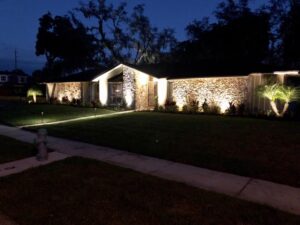
Well-designed outdoor lighting doesn’t just brighten your community, it builds safety, comfort, and curb appeal for every resident.
Whether you’re part of an HOA board or a homeowner in a managed neighborhood, understanding the right approach to landscape lighting helps ensure your property stays beautiful, compliant, and secure year-round.
At Grasshoppers, we work with associations throughout Florida to design, install, and maintain outdoor lighting systems that elevate entire neighborhoods.
The Benefits of Quality Outdoor Lighting for HOAs
Investing in professional outdoor lighting brings many long-term advantages for your community, including:
- Enhanced Safety: Properly lit walkways, parking areas, and entrances help reduce accidents and deter unwanted activity after dark.
- Improved Home Values: Neighborhoods with professional landscape lighting often appear more upscale and inviting, increasing property value for every home.
- Community Appeal: Warm, balanced lighting helps create a welcoming atmosphere and strengthens neighborhood pride.
- Energy Efficiency: Modern LED systems offer superior brightness with less energy consumption, reducing overall HOA utility costs.
- Aesthetic Harmony: Consistent design across homes and common areas creates a cohesive look that enhances your community’s character and charm.
Common HOA Guidelines for Outdoor and Landscape Lighting
HOAs typically regulate outdoor lighting to ensure consistency and safety, while minimizing light pollution. Rules can vary by community, but many associations include the following standards:
- Fixture Style and Placement: Lights should blend with the community’s architectural style and be installed at approved heights or locations.
- Color Temperature: Most HOAs require warm white or neutral lighting to maintain uniform color tones across properties.
- Brightness Limits: To reduce glare or spillover onto neighboring homes, wattage and lumen output may be restricted.
- Curfew Hours: Some communities limit lighting use during overnight hours, especially for accent or decorative lighting.
- Professional Installation: HOAs often require licensed contractors, like Grasshoppers, to ensure lighting systems meet code and community standards.
If you’re unsure about your neighborhood’s lighting regulations, your HOA’s covenants, conditions, and restrictions (CC&Rs) are the best place to start.
HOA Responsibilities for Neighborhood Lighting
The HOA board is typically responsible for maintaining and managing lighting in shared and common areas, such as entrances and monument signs, clubhouses, pool areas, playgrounds, pathways, sidewalks, community parks, as well as parking lots and perimeter lighting.
Keeping these areas well-lit not only enhances safety but also protects the HOA from potential liability related to poor visibility or unsafe conditions.
Regular maintenance, inspections, and upgrades to modern energy-efficient systems can help your neighborhood avoid costly outages and complaints.
We'll Hop On It!! Just leave your information below.Speak with a Grasshopper's Landscaping Expert!
Outdoor Lighting Guidelines for Homeowners in an HOA
If you’re a homeowner within an HOA, you may want to install your own landscape lighting, but it’s important to stay compliant. Here are some common homeowner rules to keep in mind:
- Avoid overly bright spotlights or colored lights that disrupt neighborhood uniformity.
- Don’t aim fixtures toward neighboring windows or streets.
- Request HOA approval before installing new fixtures or running additional wiring.
- Choose shielded or downward-facing lights to prevent glare and skyglow.
- Use timers or motion sensors to control lights efficiently and reduce energy waste.
Installing lighting that violates HOA standards can result in fines or required removal. So it’s always best to review the guidelines, or consult with your HOA board, before starting.
Light Pollution Concerns
Modern communities are increasingly mindful of light pollution, which can disrupt sleep, affect wildlife, and diminish the natural beauty of the night sky. To help minimize these effects, homeowners and HOAs can take several thoughtful steps.
Using full cutoff fixtures ensures light is directed downward where it’s needed, while low color temperature LEDs, typically between 2700K and 3000K, create a softer, natural glow that reduces glare. Incorporating timers and motion sensors also helps prevent excessive lighting during overnight hours, conserving energy and maintaining a peaceful nighttime environment.
At Grasshoppers, we design outdoor lighting plans that strike the perfect balance between safety, aesthetics, and environmental responsibility.
Best Practices for Neighborhood and Community Lighting
To make the most of your HOA outdoor lighting system, follow these professional recommendations:
- Conduct annual inspections to replace burnt-out bulbs and check timers.
- Transition to LED systems to lower energy use and maintenance costs.
- Use smart lighting controls for flexible scheduling and remote adjustments.
- Keep fixtures clean and free of debris to maintain brightness and consistency.
- Work with a licensed lighting contractor, like Grasshoppers, to ensure compliance and long-term performance.
Partner with Grasshoppers for HOA Outdoor Lighting
Whether you’re looking to install lighting across your entire neighborhood or upgrade existing fixtures, Grasshoppers can help. Our experienced professionals design custom HOA lighting systems that improve safety, efficiency, and curb appeal, all while meeting community standards.
Let’s make your neighborhood shine. Contact Grasshoppers today to schedule your HOA lighting consultation.